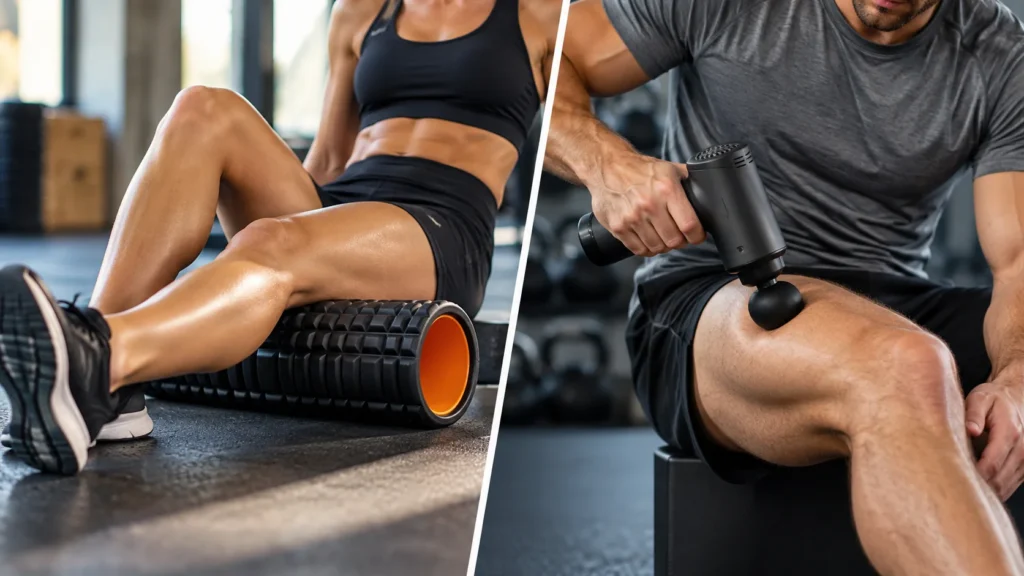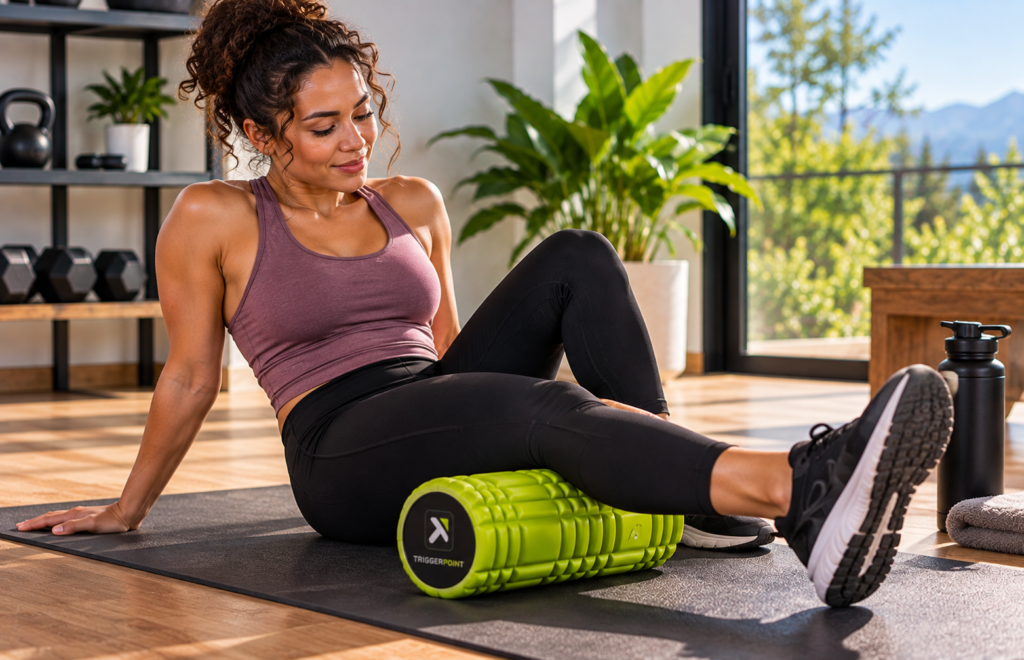
Learning how to use a foam roller after running can help runners incorporate self-massage into a broader recovery routine. Research suggests that foam rolling may temporarily influence flexibility and the perception of post-exercise soreness; however, it should not be treated as a guaranteed method for accelerating muscle recovery.
What Is Foam Rolling?
Foam rolling is a form of self-massage in which a cylindrical roller is used to apply pressure to soft tissue. The technique is frequently described in the scientific literature as a form of self-myofascial release.
Runners commonly use foam rollers on the calves, thighs and gluteal region before or after training. In addition, rollers are available in different densities, surface textures and sizes.
Nevertheless, the physiological mechanisms responsible for reported foam-rolling effects are not completely established. Therefore, claims that a roller literally “breaks up” fascia, scar tissue or toxins should be treated cautiously.
Should Runners Use a Foam Roller After Running?
Research provides some support for using foam rolling after exercise, particularly when the goal is to reduce the perception of muscle soreness. However, the magnitude and consistency of these effects vary across studies.
Wiewelhove et al. (2019) analyzed 21 studies examining foam rolling before and after exercise. Post-exercise rolling produced small effects on some recovery outcomes and reduced perceived muscle pain. Overall, however, the authors characterized many of the effects on performance and recovery as minor or partly negligible.
More recently, Zhou et al. (2024) conducted a systematic review and meta-analysis of 16 studies involving 515 participants. Their analysis reported an effect of foam rolling on exercise-induced muscle soreness.
In contrast, Hendricks and colleagues’ broader evidence base and a 2023 systematic review of foam roller or stick massage highlight substantial methodological variation and uncertainty regarding several indirect markers of muscle damage. Consequently, foam rolling should not be described as a proven way to completely restore damaged muscle.
How to Use a Foam Roller After Running
A post-run routine can be kept relatively simple. Rather than applying as much pressure as possible, the runner can use controlled movements and adjust body weight according to comfort.
Start with a muscle group that feels appropriate to address, such as the calves, quadriceps, hamstrings or gluteal region.
Body position should allow pressure to be controlled. Beginners can support more body weight with their hands or opposite leg.
Move across the muscle in a controlled manner instead of rapidly moving backward and forward.
Stronger pressure is not automatically more effective. If pressure produces sharp pain, numbness or unusual symptoms, the session should be stopped.
This article provides general educational information and does not replace individualized medical or physical-therapy advice.


Affiliate Disclosure: This website contains affiliate links. We may earn a commission when you purchase products through links on our site, at no additional cost to you. As an Amazon Associate I earn from qualifying purchases.
Learn moreWhere to Use a Foam Roller After Running
When learning how to use a foam roller after running, runners often begin with major lower-body muscle groups. However, the roller should generally be applied to muscular tissue rather than directly over joints or bony structures.
1. Calves
The runner can sit with one calf resting on the roller while using the hands and opposite leg to regulate body weight.
From this position, the calf can be moved slowly across the roller. Furthermore, rotating the leg slightly can alter which area of the calf receives pressure.
Pressure should remain tolerable. Direct pressure behind the knee should be avoided.
2. Quadriceps
For the quadriceps, the runner lies face down with the roller beneath the front of the thigh. The arms and opposite leg can help regulate pressure.
The movement can extend along the muscular portion of the thigh while avoiding direct pressure on the kneecap and hip bones.

3. Hamstrings
To target the back of the thigh, the runner can sit with the roller beneath the hamstrings and support the upper body with the hands.
For example, keeping the opposite foot on the floor reduces the amount of body weight placed on the roller. More pressure can be introduced gradually when appropriate.
4. Gluteal Region
The runner can sit on the roller and shift body weight toward one side. Small positional changes allow different areas of the gluteal musculature to contact the roller.
As with other areas, the objective is not to produce maximum pain. Instead, pressure should remain controlled and tolerable.
How Long Should Runners Foam Roll After Running?
Research does not establish one universally optimal post-run foam-rolling duration. Protocols differ substantially among studies, which makes a precise evidence-based prescription difficult.
Hendricks et al. (2020), in a systematic review of 49 studies, concluded that foam rolling may reduce muscle stiffness, increase range of motion and influence delayed-onset muscle soreness. However, the authors also emphasized differences among protocols.
Therefore, runners do not need to assume that a very long or painful session will provide greater recovery benefits. A short routine targeting selected muscle groups can be more practical.
Does Foam Rolling Improve Flexibility?
Range of motion is one area in which foam rolling has produced relatively consistent positive findings. Cheatham et al. (2015) reported short-term improvements in joint range of motion without apparent reductions in muscular performance.
Furthermore, a later meta-analysis of longer-term foam-rolling training found a moderate improvement in range of motion compared with control conditions. Nevertheless, improved range of motion should not automatically be interpreted as faster recovery from muscle damage.

- Foam
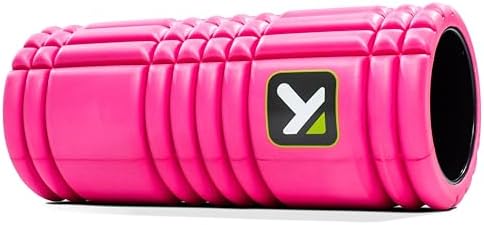
- PATENTED MULTI-DENSITY SURFACE REPLICATES A MASSAGE THERAPIST’S HANDS: Three distinct foam zones, wide and flat like the…
- RIGID HOLLOW CORE WRAPPED IN EVA FOAM FOR LASTING FIRMNESS: Unlike solid foam rollers that compress and lose shape over …
Affiliate Disclosure: This website contains affiliate links. We may earn a commission when you purchase products through links on our site, at no additional cost to you. As an Amazon Associate I earn from qualifying purchases.
Learn moreCommon Mistakes When Using a Foam Roller After Running
Using Excessive Pressure
Foam rolling can feel uncomfortable, but severe pain should not be treated as evidence that the technique is working better. Instead, body position can be adjusted to reduce pressure.
Rolling Directly Over Joints and Bones
A foam roller is generally used on soft tissue. Therefore, direct pressure over the kneecap, ankle bones and other prominent bony areas should be avoided.
Rolling Too Quickly
Rapidly moving across the roller can make pressure difficult to control. In contrast, slower movements allow the runner to adjust body position and pressure more deliberately.
Expecting the Foam Roller to Fix an Injury
A foam roller is not a diagnostic or medical treatment tool. Persistent or significant pain after running may require assessment by an appropriately qualified healthcare professional.
When Should a Runner Avoid Foam Rolling?
A general recovery article cannot determine whether foam rolling is appropriate for every medical condition or injury. For example, unusual swelling, acute injury, unexplained pain, numbness or other concerning symptoms should not simply be treated by applying more pressure with a roller.
Frequently Asked Questions About Foam Rolling After Running
Is it good to foam roll after running?
Foam rolling can be incorporated after running if the runner finds it comfortable and useful. Research suggests potential small benefits for perceived soreness and some recovery outcomes; however, findings are not uniformly positive across all recovery measures.
How long should a runner use a foam roller?
There is no universally established post-run duration. Research protocols vary, so a practical routine can focus on selected muscle groups without assuming that longer sessions are necessarily more effective.
Should foam rolling hurt?
Some pressure may feel uncomfortable. However, sharp or severe pain, numbness or other unusual symptoms should not be considered a normal requirement of foam rolling.
Does foam rolling remove lactic acid?
Foam rolling should not be promoted as a method that “removes lactic acid” after running. Exercise-related lactate metabolism is more complex than this common explanation suggests, and the proposed benefits of foam rolling should be described according to measured outcomes such as range of motion or perceived soreness.
Can foam rolling replace stretching?
The two practices are not identical. Both can influence range of motion, and the appropriate choice depends on the runner’s objective and training context. Therefore, foam rolling does not need to be treated as a universal replacement for stretching.
How to Use a Foam Roller After Running: Final Takeaways
Learning how to use a foam roller after running begins with controlled pressure rather than aggressive rolling. The calves, quadriceps, hamstrings and gluteal region are common areas runners may choose to address.
Overall, research suggests that foam rolling can influence range of motion and may reduce the perception of post-exercise soreness. However, its effects on recovery and performance are generally modest and the scientific literature does not support treating it as a cure-all recovery technique.
Therefore, foam rolling is best considered one optional component of a broader recovery strategy that also accounts for training load, rest, sleep and appropriate nutrition.
References
Cheatham, S. W., Kolber, M. J., Cain, M., & Lee, M. (2015). The effects of self-myofascial release using a foam roll or roller massager on joint range of motion, muscle recovery, and performance: A systematic review. International Journal of Sports Physical Therapy, 10(6), 827–838. https://pubmed.ncbi.nlm.nih.gov/26618062/
Wiewelhove, T., Döweling, A., Schneider, C., Hottenrott, L., Meyer, T., Kellmann, M., Pfeiffer, M., & Ferrauti, A. (2019). A meta-analysis of the effects of foam rolling on performance and recovery. Frontiers in Physiology, 10, 376. https://doi.org/10.3389/fphys.2019.00376
Hendricks, S., Hill, H., Hollander, S. D., Lombard, W., & Parker, R. (2020). Effects of foam rolling on performance and recovery: A systematic review of the literature to guide practitioners on the use of foam rolling. Journal of Bodywork and Movement Therapies, 24(2), 151–174.
Zhou, J., Jia, D., Mao, J., & Xu, Y. (2024). Preventive effect of foam rolling on muscle soreness after exercise: A systematic review and meta-analysis. Journal of Bodywork and Movement Therapies, 40, 1890–1898. https://doi.org/10.1016/j.jbmt.2024.10.009